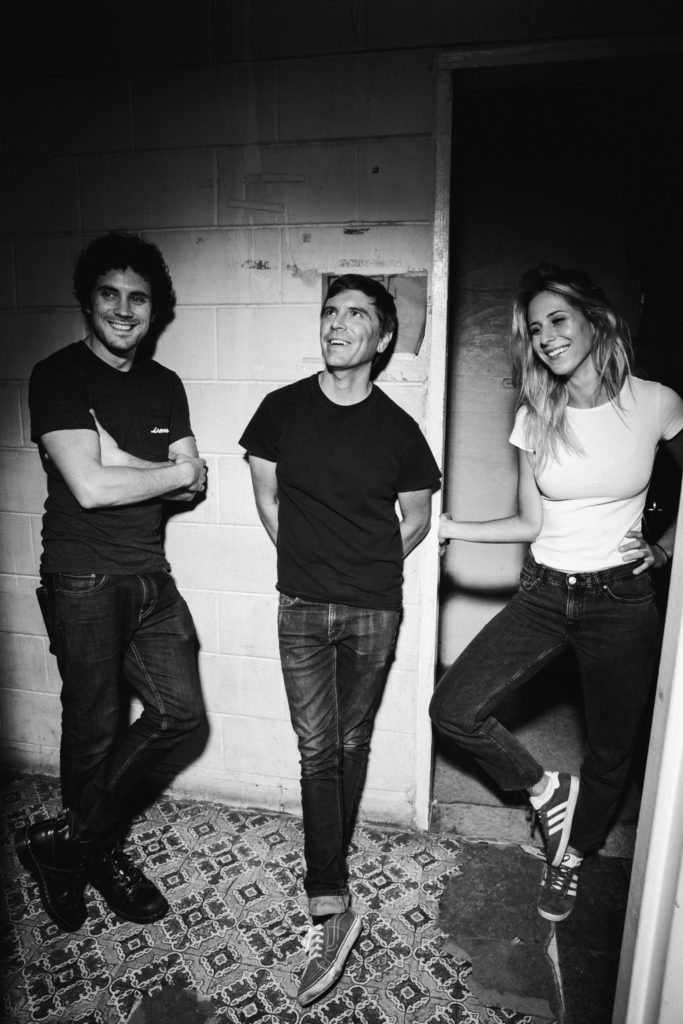
“I always wanted to play music” – a conversation with Bully’s Alicia Bognanno

By Blake Ells

Photo Credit: Alysse Gafkjen

Bully made a huge mark on Nashville’s new rock sound with this year’s Losing, a critically acclaimed sophomore effort that is topping everyone’s year-end best-of lists. Raised in Minnesota, Alicia Bognanno formed the band when she came to Middle Tennessee State University to pursue a degree in audio engineering.
On the band’s way into Birmingham, Bognanno talked about how engineering remains a passion, signing with Columbia Records and maintaining “cred” while on a major label.

Birmingham Stages: Bully is a Nashville band, but you grew up in Minnesota. Which do you identify with more?

Alicia Bognanno: Definitely not Nashville. I like Nashville, but I’m not a Southern person; I don’t have a deep love for the South. It’s cool, it’s a great place to live and it’s very practical to be a band there, but I feel more at home when I’m in Chicago or Minneapolis for sure.

Birmingham Stages: Is that because you feel alienated from mainstream Nashville?

AB: No, I grew up there. I like the weather there.

Birmingham Stages: When you were attending Middle Tennessee State, you managed to get an internship with Steve Albini. How did that happen?

AB: I was in school for audio engineering and they knew that I wanted to do an internship for credit points and I was interested in analog recording, so I emailed them and inquired about an internship.

Birmingham Stages: Were high profile internships like that common for MTSU students?

AB: That’s hard to say. I didn’t really know anyone else from MTSU that had done it, but I think a lot of that is because it requires traveling and you have to be in Chicago for a while. But it was great. It was really awesome. It was a great experience.

Birmingham Stages: Did you intend on having a band, or was the original goal to go into the production side of the music industry?

AB: No, I always wanted to play music.

Birmingham Stages: When did you first start playing your own music and writing your own songs?

AB: When I was in high school, but mostly in college.

Birmingham Stages: Did you have a band in high school?

AB: No, I grew up in the suburbs of Minneapolis, and no one was really playing in bands, which is why I kind of went the engineering route. Once I was in college, everyone was playing music and in bands together and going to house shows. It was a little bit easier to get a band together or find people to play live.

Birmingham Stages: Being isolated from music a bit in Minneapolis, how did you first discover the bands that influenced the music that you make now?

AB: I had a couple of really good friends with really good taste in music that introduced me to a lot of the bands that I love now. A lot of it was the people that I was around and their desire to play music and listening to good music and being supportive of one another.

Birmingham Stages: Would you like to move forward as a musician and a producer? Is it something you want or is it even something you feel like you’d have time for?

AB: It kind of depends—I can always focus on engineering, but I don’t think that’s gonna happen anytime soon. So I’ll just keep going and balance the two of them when I can.

Birmingham Stages: Have you worked on anyone else’s record or has all of your focus been on your own music?

AB: Mainly just Bully stuff and stuff that I’m doing for friends.

Birmingham Stages: Did you have any reservations about maintaining “cred” when you signed with a major label or did the tour support make accomplishing the goals you have for Bully easier?

AB: I did—we were talking to SubPop at the time and I would have preferred to do that, but nowadays, most indie labels are owned by majors. So it’s not that big of a difference. But yeah, to be honest, at the time we really needed a van so we could tour. I was driving around in a $3,000 salvaged minivan that I traded my car for and all we wanted to do was play. So we were going to sign with whoever was best for that.
The people that we were talking to at the label were totally cool with us having creative control and me engineering it and producing it and we liked that part of it, so it ended up working out great. And they were awesome. And it’s been great with SubPop, too. We didn’t have any major label horror stories of them trying to manipulate our sound or tell us how to write or anything like that.

Birmingham Stages: Who do you think is most responsible for the new rock sound in Nashville and how does it coexist with the Nashville that everyone knows?

AB: Since I’ve been there, there’s always been a rock scene and an independent scene and so many people that contribute to it that it’s hard to point out one person. And we all [coexist]. When I was working the Stone Fox, we’d have rock shows, but there were tons of people around our same age doing their country thing. It’s totally cool; we’re all friends and definitely not competitive. Parts of it overlap, and it’s easy to like both things and bounce back and forth. It’s a very supportive place for a lot of genres to coexist in.

Birmingham Stages: Was Sleater-Kinney an influence for you?

AB: I loved Sleater-Kinney, but I think I was influenced the most by Kim Deal of The Breeders. Pod was a really, really special album for me. I’ll never forget listening to Pod for the first time and everything about it was just so incredible. When I think about albums that I just sat around and listened to on repeat, Pod was one of them. Also anything that Kim Gordon has been a part of has meant a lot to me.

Bully will perform at Saturn on Tuesday, December 12. Doors open at 7 p.m. and the show begins at 8 p.m. Smut and Snacks open. Tickets are $14 and can be purchased at www.saturnbirmingham.com
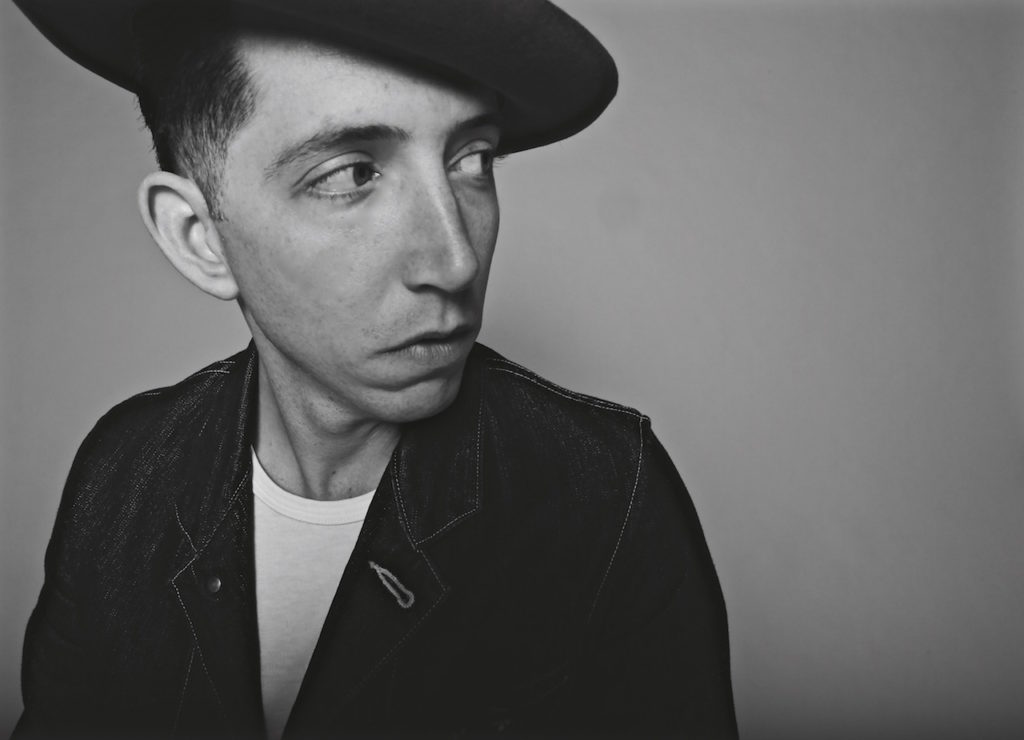
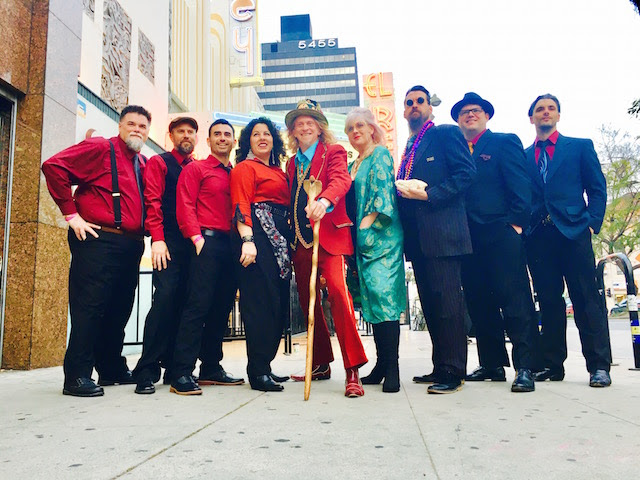
Catching up with Pokey LaFarge

Singer/songwriter brings his Manic Revelations tour to Saturn

By Brent Thompson

Photo Credit: Nate Burrell

In both his look and songs, Pokey LaFarge exudes the word “timeless.” Exposed to several classic American music genres in his youth – Blues, Folk and Western Swing among them – the modern-day troubadour has taken these same sounds and melded them into his own unique style. Earlier this year, LaFarge released Manic Revelations [Rounder Records], a 10-track collection that finds him breaking new ground (heard in the soul-tinged “Better Man Than Me”) while still retaining his musical sensibilities. On Thursday, December 7, the singer/songwriter/guitarist will perform at Saturn with The Easy Leaves opening the 8 p.m. show. Recently, LaFarge shared his thoughts on his new album in particular and the current musical climate in general.

Birmingham Stages: We are really enjoying Manic Revelations. Were these songs mostly newer compositions, older ones that had been around for a while in bits-and-pieces or a combination of both?

Pokey LaFarge: [They’re] all new tunes were written in a few months’ time around the early part of 2016.

Birmingham Stages: You seem to have a great foundation of American history and American roots music thanks to your family and upbringing. If you will, talk about how those translate to your career.

PL: I used to think about that and talk about that a whole lot more. These days I’m trying to relearn everything, so as to not get bogged down with what I think I know or what others think they know.

Birmingham Stages: Your can hear a mix of genres in your sound. Is that something you consciously strive for in your writing or is it the natural outpouring of all you’ve absorbed over the years?

PL: I don’t try and think of genres so much as I do the feeling I get from certain artists and personal experiences. That is what I try to capture very organically in my music.

Birmingham Stages: How would you describe your writing process? Are you more productive at home, on the road or wherever the inspiration strikes?

PL: I write all the time but it is at home – where if I can find the downtime – I’ll turn everything off and I finish my work.

Birmingham Stages: Some artists say this a great time because iTunes, satellite radio and Youtube provide instant accessibility around the globe. Others say that it’s a hard time to separate yourself and be heard among the crowd for that same reason. How do you view the current climate?

PL: I’d say both are true, in fact. I wouldn’t pretend to say one side is more right.

Pokey LaFarge will perform at Saturn on Thursday, December 7. The Easy Leaves will open the 8 p.m. show. Advance tickets to the 18+ show are $16 and can be purchased at www.saturnbirmingham.com.


Squirrel Nut Zippers bring the Christmas swing to The Lyric

A conversation with singer/guitarist Jimbo Mathus

By Blake Ells

Jimbo Mathus moved back to Taylor, Mississppi around 2003 and he’s been a big part of Oxford’s music community since, making frequent appearances on Thacker Mountain Radio. He grew up in Corinth, just south of Jackson, Tennessee and just west of Muscle Shoals, Alabama. When he was 16, he recorded with legendary Florence native Sam Phillips in Memphis. He studied at Mississippi State before leaving for Chapel Hill, North Carolina; he’d spend a decade there and begin a music career before moving back home. So he has a bit of a relationship with the South.
He talked about that relationship and about recording with Phillips. He talked about Buddy Guy and Mississippi State and Ole Miss and Memphis and W.C. Handy, too.

Birmingham Stages: How did end up recording with Sam Phillips at 16-years-old?

Jimbo Mathus: Well my shop teacher paid for it. We had a little rock and roll band, and he said he wanted to be our manager. [laughs] It was one of those things, man. He didn’t know what the hell he was doing; we had some 45s printed up and sold them at the sock hops and shit.
He opened up the Memphis phone books and looked up studios and that was the one he saw. He didn’t know Sam Phillips from Abe Lincoln. That’s just the one that was open and the one that we went to—I didn’t even realize until years later where the hell I’d been. Roland James was the engineer and all that. I didn’t realize all that shit until years later.

Birmingham Stages: Did you accidentally meet Sam when you had that session?

JM: No, because we were just a session for hire. We probably had half a day—two or three hours. But I do know that Roland James was the engineer, because he was the house engineer then.

Birmingham Stages: When you recorded that record, were you already writing your own songs or were you performing covers?

JM: I was just starting to get hip to the concept of writing my own songs. I didn’t start that in earnest until I was 17 or 18—about 18.

Birmingham Stages: Did you ever get grief in Mississippi for being a white guy playing the blues?

JM: I didn’t really do it in public; it was just kind of a private thing that I was learning on my own. By the time I started playing blues in public, I had already won a Grammy for the blues with Buddy Guy, so I didn’t catch a lot of grief behind that. [laughs]

Birmingham Stages: How important was his seal of approval and how valuable was the time you spent with Buddy?

JM: Oh my God—it was incredible. I learned so many lessons, man, and when you’re working with somebody like that—you ain’t just learning about the blues, per se, you’re learning about everything. You’re learning about music, handling your business and being a master at what you’re supposed to be doing. I worked with him on and off for five years.
After that experience, I was like, “Well, I reckon I’m a blues guitar player now.” I really don’t have a lot to be ashamed of, so I just jumped on in.

Birmingham Stages: How did you get hooked up with Buddy? How did he get the notion that you might be a blues guitar player when you weren’t really playing in public that way?

JM: At that time, I was in the heyday of the Squirrel Nut Zippers, which had little or nothing to do with what I was doing with Buddy Guy. But some people that had known me in some studios—particularly down at [a studio] down in New Orleans—recommended me for the job because they knew me and they had spent enough time with me to know. Here I was playing a lot of different types of music—including the blues—and they wanted sort of a wild card approach to it; they didn’t want the standard dude anyway.
So it came through word of mouth—the producer called me and he had never heard of me and didn’t know anything about anything pertaining to me. But he said, “Man, you’re recommended.” And he explained the concept to me and I told him I’d be perfect for it and he said, “I think you’re right.” And he hired me. He told me to get down there and that started a whole new path to my life. Pretty amazing.

Birmingham Stages: How did you first meet Luther and Cody Dickinson and what’s that relationship like now?

JM: I met [the Dickinsons and their father, Jim] at the same time. That was in Memphis at a place called Barrister’s; it was a club—one of the only times that the Zippers ever played in Memphis back in the day. [Luther’s] band Gutbucket was the opening act. We were just passing through town; I didn’t know anything about Luther, but I knew about Jim; I knew about his history and what he’d done and who he’d worked with and all that kind of stuff. Luther and I hit it off big time and started communicating and started collaborating almost immediately. And the same for Code-man, but Luther is more of my main collaborator.
I went on to work with Jim—I played on a lot of his records—I think Killers from Space, Jungle Jim and the VooDoo Tiger and he and I became really good friends around the mid ‘90s.

Birmingham Stages: You grew up in Oxford and you went to school in Starkville for a little bit—are you a Rebel or a Bulldog?

JM: I plead the fifth.

Birmingham Stages: So that’s as dangerous of a topic there as it is here?

JM: Hell yes! [laughs] I got arrested in Starkville more times than anywhere else, I’ll say that.

Birmingham Stages: Mississippi deals with a lot of issues related to its image. One that’s been a hot topic in recent years is the state flag. Is that something that you think should be changed or rectified in any way?

JM: Yeah. I think they oughta go back to the old magnolia tree flag. That’s just me.
I changed my mind about that over the years. And that’s the way I feel about it. Because that rebel thing—ain’t no way to spin that in the modern world—just drop it. It’s more trouble than it’s worth.

Birmingham Stages: Squirrel Nut Zippers was a lot different than everything else you did. Was that deliberate?

JM: Well, it was the first thing I was known for, so most people think everything I’ve done in the 20 years since then was different from that. It’s a whole different genre of art; it’s based on other things than the rest of my career, like honky tonk music, blues, rock and roll, psychedelic, swamp pop, gospel, all the other stuff. It’s not early American jazz, vaudeville, cabaret, calypso and all that other stuff. It’s just two different things. It wasn’t on purpose. It was by accident; I wanted to learn everything I could about music, art, everything that had gone down to lead up to where I was at in my life at that time. So I set about learning all about it and it was a product of me figuring out how to play W.C. Handy; how to play jazz. So naturally, as a writer, when I learned the moves, I started writing in that genre. And that happened to take off; it was really quite an accident that anybody ever heard that kind of thing out of me. It was a wild accident.

Birmingham Stages: I think in a lot of the other things you do, you can hear what geographically influences you. But you can’t with Squirrel Nut Zippers. So was that Handy?

JM: Yeah, it came from people like W.C. Handy, Stephen Foster, Louis Armstrong, “Fats” Waller, Bertolt Brecht. German theater—we had the whole costuming—look and style of theater. And my whole thing was Kurt Weill, Bertolt Brecht—German-type stuff; the calypso stuff—Lord Executor, Roaring Lion—they were like the first rappers, basically. New Orleans has quite a bit of it. That’s where geography comes in.

Birmingham Stages: I guess now that I think of it, Mississippi probably gets a lot of influence from New Orleans and Muscle Shoals and you’re in the middle of that weird molding together of two sounds.

JM: Yeah! And it comes out of Jackson, Tennessee. Memphis is the center of my universe. It pulled from the Delta, it pulled from the hillbilly music, it pulled from Muscle Shoals, it pulled from Tupelo—so Memphis is the geographic center of my music.

Squirrel Nut Zippers Christmas Caravan comes to The Lyric Theatre on Friday, December 1. Doors open at 7 p.m. Show begins at 8 p.m. Tickets are $28.50-$49.50 and can be purchased at www.lyricbham.com.

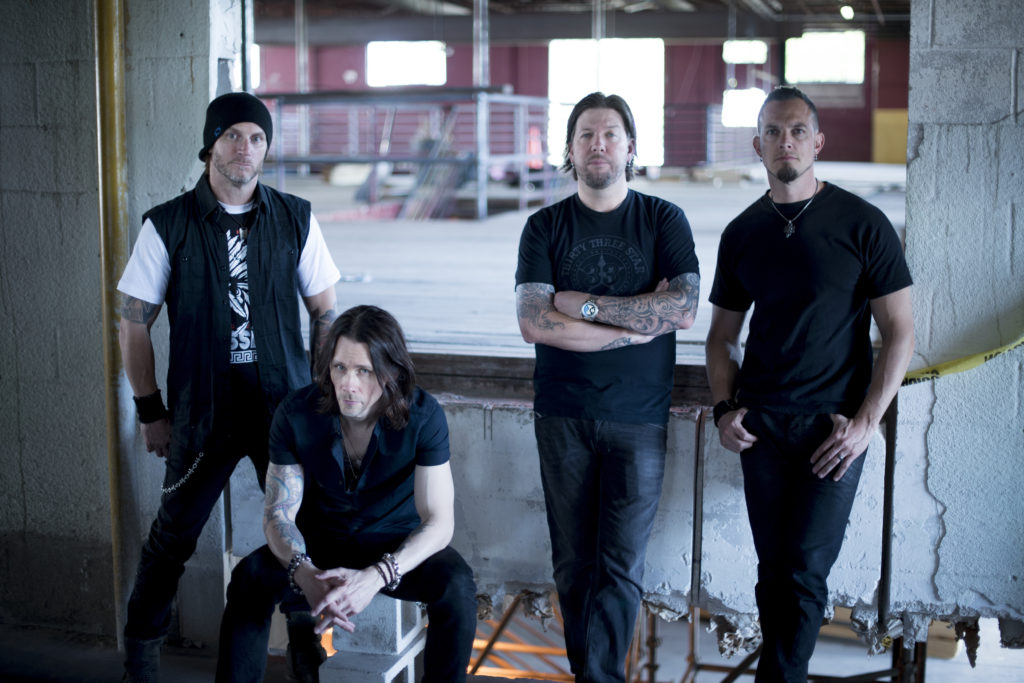
Catching up with Mark Tremonti of Alter Bridge

By Blake Ells

Photo Credit: Carlos Amoedo

Alter Bridge now has six studio albums under its belt over the past 13 years. The band formed as Creed waned and shortly after frontman Myles Kennedy declined an offer join Velvet Revolver, creating a hard rock supergroup that’s tremendous run has no end in sight.

Their guitarist is Mark Tremonti, one of the most legendary hard rock guitarists in a post-Slash and Van Halen world. Ahead of the band’s Birmingham show at Iron City, Tremonti shared more about how he first got into guitar, who influenced him and how he has evolved creatively. He also discussed what’s in store for 2018.

Birmingham Stages: You grew up in Detroit, but you kept moving farther and farther South. What kept leading you this direction?

Mark Tremonti: My parents moved down when I was a sophomore in high school. I thought I’d always move back north, but your blood thins out a little bit and you get a taste of the sun and you take vacations north and say, “I could never move back here.” That’s where I’m at in my life.

Birmingham Stages: Who do you root for when Clemson plays Florida State?

MT: Whoever’s got the better chance of winning a championship.

Birmingham Stages: So you’re a Clemson fan this year, I guess?

MT: [Laughs] Oh, absolutely. This is about the worst year I can ever imagine Florida State going through.

Birmingham Stages: Do you still have any connections to Detroit or is Florida home now?

MT: I’ll always consider Detroit my home—it’s a big part of who I am. Florida is my home now, but that’s my roots for sure.

Birmingham Stages: What or who is the best band or artist from Detroit?

MT: I’ll say Bob Seger. He’s a big Detroit guy.

Birmingham Stages: How important was Birmingham and [radio station] The X to your early career success?

MT: Very. Back in those days, we spent most of our time chasing down radio and we did acoustic performances and they played the hell out of the song on the radio and got all of those people in those seats at the concerts.

Birmingham Stages: At this point, Alter Bridge has more studio albums than Creed ever had. Has this been a more rewarding project for you at this point?

MT: Artistically, I feel like it’s more rewarding because it’s what I’m currently doing and I feel like if you’re not getting better, you’re getting worse. I’ve been working hard to improve over the years. I’m very proud of what we did back in the Creed days and I wouldn’t be here now if we didn’t do that, but I think of that as a band I was in when I was a young kid. I’ve learned a lot since those days. I’m more proud—artistically now—of the Alter Bridge stuff.

Birmingham Stages: You’ve been pretty prolific—you’ve churned out a new studio record around every two years and there’s a new live record this year. Can you continue at that pace?

MT: I am going in the studio in January for my next solo record. With Alter Bridge, we’re coming out with a new DVD next year and I’ll be releasing my solo record; Myles [Kennedy, lead vocalist] will be releasing his solo record; there might even be a Slash and Myles record…who knows? There’s always a heck of a lot of material for folks to grab onto.

Birmingham Stages: But after you step away from each other for a year, you’ll come back together as Alter Bridge, right?

MT: Oh yeah, I think it’s very healthy for us. We’re so busy with Alter Bridge that if we just kept going, we might get burnt out on it. I think when we take that break and come back to it, it’s fresh all over again. We’re very excited to get back into it.

Birmingham Stages: Is that a lesson that you learned from the early days—to take some time away from one another and gather yourself?

MT: Yeah, in the early days, it felt like crunch time all the time. There wasn’t a lot of down time. Back then, we didn’t know. We’d hear that it was going to be our “sophomore slump” if we didn’t come out with a great record—the single is really important—your career is going to end. There were always these end of your career type of scenarios if you didn’t perform well enough on something and I think it was about five years ago that I reached a point in my career where I thought, “I’m glad to not have those sorts of pressures anymore.” At this point, we’ve done it long enough where if we just keep working hard we can do it as long as we want to do it.

Birmingham Stages: Do younger kids still get into hard rock and roll? Or are your fans the fans guys in their 30s and 40s that have loved you since they were young?

MT: Depends on where you’re at. We go to a lot of European countries and there’s tons of kids there. We get all ages; when we first started, it was a lot of dudes in baseball caps, but now it’s a good mixture of men, women, young and old…every culture…coming out to the shows. And that’s great.

Birmingham Stages: Who was the guitarist that inspired you and made you want to learn how to play?

MT: A lot of people, but at a young age, I’d hear a song come on the radio and the guitar breakdown would happen—some songs that stick out to me—or certain bands—-like Boston would have a lot of songs that would breakdown to a guitar and I loved that. J Geils Band—I remember when “Love Stinks” hit the radio and the guitar broke down at the end and I thought it was the coolest thing in the world and I went out and bought the record. A lot of bands did that back then and I was obsessed with the sound of the guitar.

And I saw the movie Back to the Future, and when Michael J. Fox got to play with that band, I thought it was the fucking coolest thing in the world. Crossroads with Steve Vai blew my mind—when they were fighting for his soul in the movie. Years later I learned how to play that solo and loved it.

Of course my older brothers listened to stuff like Ted Nugent and KISS. My other brother was into Slayer and Metallica. That’s when I became obsessed with music was when I discovered Metallica and Slayer—some of the heavier stuff.

Birmingham Stages: Were you self-taught?

MT: Yeah. I’m self taught. I bought my first guitar for $10 from one of my buddies and I found an amp at a pawn shop for $40. I learned as much as I could by just fumbling around on the guitar. I don’t know how much longer after that that my parents got me a guitar lesson at a guitar shop, but the guy wanted to teach me the Mel Bay book 101 where you learn “Silent Night” or “Jingle Bells” or whatever the hell he was trying to teach me and I wasn’t interested so I never went back. I had more fun learning on my own.

Birmingham Stages: Did you form your first band shortly thereafter?

MT: Yeah, I had a junior high band—the first band was called Diversion, and I think I may have been in that band in 7th grade. Our drummer was great; our singer had a punk vibe to him. There was me and my buddy Kevin playing guitar.

There was another band in town named Distortion, and they were kind of the hot band in town at the time. We decided to take both bands and split them up to create a supergroup, getting rid of the guys that weren’t really into it. That formed a band called Wit’s End. We recorded a five-song demo in Detroit.

Alter Bridge: The Last Hero Tour comes to Iron City on Wednesday, November 29. Doors open at 6:30 p.m. and the show begins at 7:30 p.m. Sons of Texas and All That Remains open. A few tickets remain and they’re $31.50 in advance and $35 at the door.

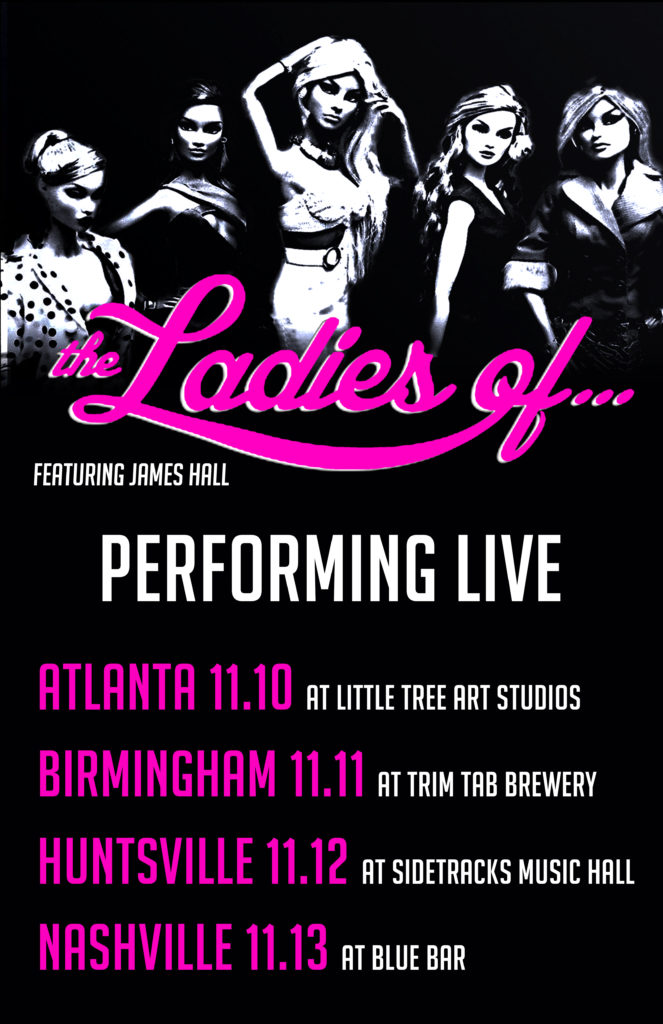
Southern supergroup The Ladies Of… performs at Trim Tab Brewing Co.

By Brent Thompson

After years of fronting bands and seeing record deals come and go, Jim Troglen landed on an idea: Create a platform that would allow a collective of veteran, trusted musicians to take part in an ongoing project as their time and interest permitted. So, in 2012, Troglen – a.k.a. Johnny Blade, Woa Hahne Bla’de, Kevin Almost – formed The Ladies Of… with an all-star lineup of like-minded players. The names of the project’s revolving cast of participants – James Hall, Roman Glick, Jack Massey and Mark Patrick among others – will surely ring familiar to anyone who has followed the regional music scene over the past 30 years. On Saturday, November 11, The Ladies Of… will perform at Trim Tab Brewing Co. Recently, we spoke with Troglen by phone as the band prepared to embark on its upcoming run of Southeastern dates.

Birmingham Stages: Jim, thanks for your time. If you will, discuss the origins of The Ladies Of…

Jim Troglen: It’s a contradiction because this thing is not even a band. When you and I were younger, we always resisted anybody telling us what to do. Fast forward to now, I want people to tell me what to do because I don’t want to do a damn thing. You do the work and I’ll show up. So I do the work and they show up. I’m by no means a dictator in the sense of how it is executed. It’s like a softball team – bring your glove and be at the field Thursday at 7 p.m. I’ll bring the balls, bats, jerseys, beer and sodas. I’ll have everything.

Birmingham Stages: You’ve experienced the highs and lows of the music business. If you will, talk about how that experience translates to this project.

JT: The thing that’s changed between then and now is, back then, you had to work harder in a different way to expose yourself. It was based upon word-of-mouth, phone calls and mailing lists with stamps and now you get hit in the face with so many options. There’s nothing really precious or special about music anymore. What we’re doing isn’t precious or special, but it’s the best-composed music I’ve ever been a part of and it’s a substantial group of people with extraordinary accomplishments under the belts.

Birmingham Stages: The players in The Ladies Of… are people you’ve known personally and professionally for many years. If you will, talk about the criteria you established when you launched this project.

JT: The person must have two qualifications – you must have your shit together and you must be magical. The band itself is comprised of whoever shows up and nobody feels compelled to have any ownership beyond being present and giving a damn. You can’t get in the club if you’re an idiot. There’s no money in this but there’s passion and interest and my skill is organizing. I can get everybody in a room and make it exciting and respectful.

Birmingham Stages: It’s great to see that you and these other players still have the passion to record and perform after all the years.

JT: I’ve got three children and a wife, but I’m not going to sit idle. In the instant I get to be me, I’m not going to watch TV. I’m going to figure out how to get people together and kick something in the ass. That keeps me young because I have to continually figure out, “How am I going to do this?” For example, my wife went back to college a few years ago and and made the President’s List with three kids. That’s all it is – it’s the maturity and the drive. You have to get people that are mature and want to engage at that level and fight for it because all you’re doing is fighting for another chance to get it out of your system.

https://theladiesof.bandcamp.com

The Ladies Of…will perform at Trim Tab Brewing Co. On Saturday, November 11. For more information, visit www.trimtabbrewing.com

New York to Nashville: A conversation with The Lone Bellow’s Zach Williams

By Blake Ells

Zach Williams moved to Brooklyn from Acworth, Georgia in 2005 after he graduated from college. His wife was involved in a tragic horse riding accident, and doctors diagnosed her paraplegic. She was under the care of a team at the Shepherd Center in Atlanta when his friends optimistically suggested to him, “If Stacy ever gets better, let’s move to New York City together.”
She did, and they did.
During her recovery, Williams coped with his emotions in journal entries and at the encouragement of those friends, he eventually learned to play guitar and set those entries to music. He was 24, and at that point, he’d never written or performed any music. That’s where Zach’s career began. He’d been in a band with guitarist Brian Elmquist in Nashville and he invited his friend’s sister, Kanene Donehey Pipkin, to join on mandolin and bass. In 2011, The Lone Bellow began.
He recently talked about his move to Nashville, working with Dave Cobb on the band’s newest record, Walk Into A Storm, and the art of writing songs free from tragedy.

Birmingham Stages: When did Americana become a coast-to-coast thing and not just a Southern thing?

Zach Williams: I moved to Nashville last year—I was in Brooklyn for ten years—and I have four kids and touring…I had to be away from home so much in Brooklyn that I moved to Nashville because it’s a lot easier to tour from. I can be home more with my family. I’ve met Margo Price and Robert Ellis and a couple of the Phosphorescent guys, but mostly from Margo Price I’m learning that there was kind of an Americana movement going on in Nashville at the same time that we were doing our thing in Brooklyn. I think that was 2012 or 2013.
We started touring in 2013. We played 16 shows at South by Southwest and then hit the road, which is when we had to call our bosses and be like, “Uh…we’re not coming back.”

Birmingham Stages: What was the day job that you quit?

ZW: I had a myriad of jobs in Brooklyn—I worked in a basement of a jean company organizing the jean stock. Brian worked at a diner called Dizzy’s Diner. Kanene worked at a place called The Pharmacy that’s like an ice cream/soda parlor. We just did whatever we could to try to make ends meet while we were figuring it out. We made our first record in 2011 and we sat on it for two years. We released it in 2013.
There were a couple of years even after The Lone Bellow had performed that we were just trying to figure out what role it was going to have in our lives. We dreamt of being able to tour. We also kind of managed our expectations very closely.

Birmingham Stages: Did the move to Nashville make things easier?

ZW: It did. We had that super tight-knit crew in Brooklyn, which was really hard to leave behind, but my kids aren’t going to be living in my house—18 years will fly by—and I want to be there as much as I can. I’m home drastically more.

Birmingham Stages: How did you connect with Dave Cobb and how do you think you fit alongside the other artists that he’s worked with?

ZW: We had Anderson East come out and open for us, and we were trying to figure out who our next producer was going to be. We had made our second record with Aaron Dessner from The National, which was so, so fun; just getting to know that whole crew of people—Justin Vernon, all of The National guys…that whole scene was really fun.
But I knew that we were moving to Nashville and I had always heard stories from my grandfather about RCA Studios, so when I found out that Cobb was taking over the studio, I was like, “What?!”
While Anderson was making his second record, I went over there and sang on a song with him. It was a cover [Williams sings a few bars of “Sorry You’re Sick” by Ted Hawkins]. After we got done singing, I hung out with Cobb for a few minutes. I really dug his energy. We decided to work together and make a record and it was wonderful.
There’s a lot of stuff that went down—just some life stuff with the band that made things pretty difficult at times—but at the end, I think that it actually helped the music and helped the record. It was a really cool experience.

Birmingham Stages: What song do you most wish that you had written that was written by someone else?

ZW: “Lean on Me” – Bill Withers.

Birmingham Stages: What song are you most proud of that you did write?

ZW: On this last record, I wrote a song that’s to all of my kids, but it says my oldest daughter’s name in it. It’s called “May You Be Well.” I wrote it in a hotel bathroom. I missed my family. I really like singing that one. We’re two weeks into the tour and with all that’s going on, it’s been pretty cool watching the whole room sing “May You Be Well” together.

Birmingham Stages: It’s awesome that you say that because I was going to specifically ask you about that song and who’s Loretta. I guess that’s your daughter?

ZW: Yeah, that’s my oldest.

Birmingham Stages: It seems like things are going well for you now—especially considering all that you and your wife and have dealt with. Is it more difficult to write when things are going well?

ZW: There’s actually a song on this record about that called “Between the Lines.” In 2009, I was playing shows in New York and making a record and I went and met with this fancy label guy that I won’t name in a big hoity-toity office on the top floor of some building in downtown Manhattan. And he was like, “Hey man, I like your record, but I don’t want to have to wait for the next tragedy to happen for you to write more songs that are worth listening to.”
And I was like, “Screw you, man.” It really sucked. And that’s always been in the back of my mind. I’ve been talking to some fellow musicians about it; I’ve talked to Mike Taylor about it from Hiss Golden Messenger and Jim James (from My Morning Jacket). Especially Jim—Jim had some really solid advice. “We can’t need to search out regret and pain and tragedy just to create.”
So there’s this chorus on the song I wrote that says, “You don’t need to hurt to make something you love to tell you what you’re worth. And you don’t need regret to guide you through the night. You and I were made to stand up straight and read between the lines.”
Some stuff happened where one of our band members had to go to rehab and we had to cancel our recording session at RCA. Cobb was really gracious; we ended up doing the record in seven days instead. It’s an anthem to myself and to anybody else that’s trying to create something out of nothing. We don’t have to go through terrible tragedy to make something that we love.

Birmingham Stages: This is probably my favorite record that you guys have done. It’s great to hear that it was written from that perspective; congrats to you guys for that.

ZW: Thanks, man. Jason Isbell—from a distance—has been very encouraging to me. He’s done some interviews where he has talked about this as well. And Jim.
[Isbell’s] worked with Cobb, and when I called Cobb and told him the situation about rehab, Cobb was like, “Man, Jason came in a day or two after he was out. I know about this.” And I was like, “Cool.”
So I’ve only met Jason a couple of times; we opened for him a couple of times. But I’ve definitely been living vicariously through his story from a distance, and it definitely made its way into this record.

The Lone Bellow presented by Birmingham Mountain Radio comes to Iron City on Sunday, November 5. Doors open at 7 p.m. and the show begins at 8 p.m. The Wild Reeds open. Tickets are $22.50 and can be purchased at www.ironcitybham.com.


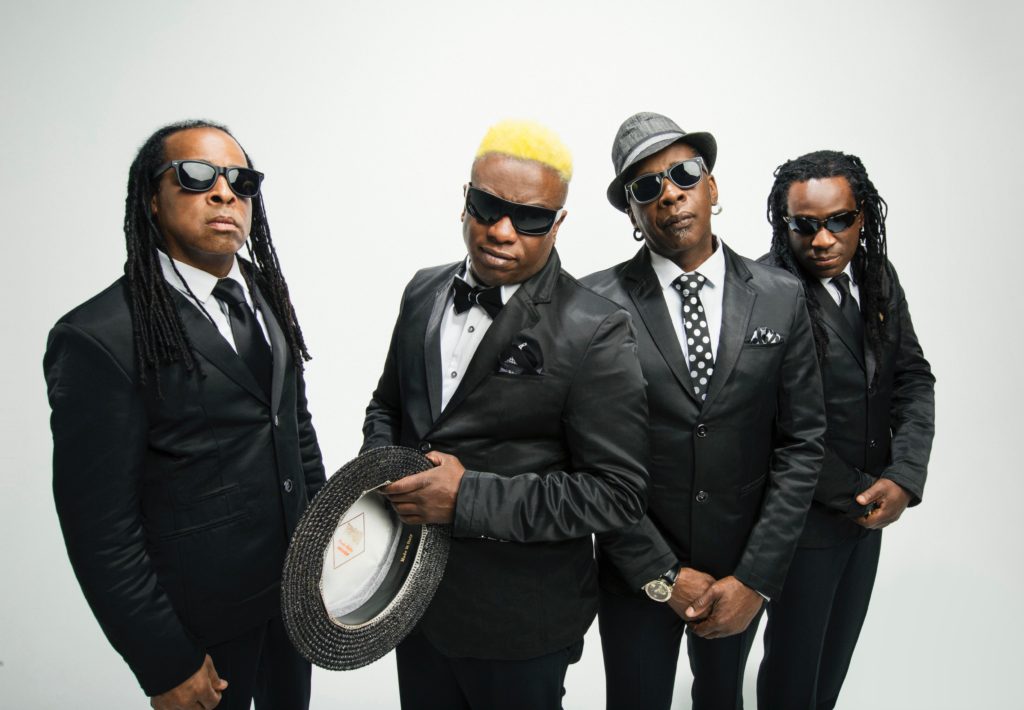
The Blues, Berklee and beyond: A conversation with Living Colour’s Will Calhoun

By Brent Thompson

Photo Credit: Travis Shinn

When Living Colour burst onto the scene with its 1988 debut release, Vivid, the band made stylistic, visual, cultural and political impressions on the record-buying public. Riding the wave of its Grammy-winning single “Cult of Personality,” the quartet was named Best New Artist at the 1989 MTV Video Music Awards. Following a five-year hiatus, the band reformed in 2000 and released its latest album, Shade [MRI Records], earlier this year. On Wednesday, November 8, Living Colour – Corey Glover, Vernon Reid, Will Calhoun and Doug Wimbish – will return to Birmingham to perform at Iron City. Recently, drummer Calhoun spoke to us by phone from the band’s tour stop in Ft. Lauderdale, FL.

Birmingham Stages: Will, thanks for your time. If you will, talk about the creation of Shade.

Will Calhoun: It started with the 100th anniversary of Robert Johnson at The Apollo [Theater]. We were all in different places and we flew in for that event. It was a celebrity event with different artists. We got together in the dressing room and we had two or three songs to choose from and we chose “Preachin’ Blues.” Corey went out there and sung his ass off and we got a standing ovation. We went back to the drawing board, realizing that we wanted to approach the Shade record with a Blues tinge to it. We wanted a deconstruction of the Blues, but sort of a reinvestment in it as well and that was the impetus that started the snowball that left the mountain. We cut grooves and stopped and reassembled them and put lyrics on there and created some songs.

Birmingham Stages: Each person in the band is involved in outside projects. Is that a challenge when it comes to writing songs for Living Colour?

WC: Actually, it works the opposite way. Songwriting isn’t a problem because one of the really beautiful things about being in this band is we bring all these things back from side projects. The outside projects don’t get in the way – they allow us to bring new recipes to the restaurant. It’s very important that we have that time invested in the four of us being in the kitchen. We can’t do it any other way in my opinion. Living Colour as a group results from the four of us hammering things out and being very hard on ourselves. That’s when Living Colour is at its best.

Birmingham Stages: You’re a schooled musician with a degree from Berklee College of Music. If you will, talk about your formal musical education and how it translates to your career today.

WC: I was a fan of studio recordings and I was a session musician when I got out of Berklee. It was very important for me to study and learn my instrument and percussion and sight-reading. I took a film writing course because writing for film is not about your ego and it taught me how to deal with subject matter. You were given a romantic scene, a murder scene and a divorce scene and you had to write the music. It was a challenge to learn how to separate from myself and do more subject matter writing. So these things were all very helpful to me when I met Vernon, Corey and [former bassist] Muzz [Skillings]. I felt like I had a little bit of experience in leaving my ego and emotion out. It was very helpful.

Birmingham Stages: How would you size up the musical climate these days? Some artists say the accessibility via technology is beneficial and others say that technology creates its own set of problems.

WC: I’ll be at the 50-yard line on that one – I think it’s a little bit of both. I think there is a lot of opportunity to get the music out but you don’t get paid for it – that’s horrifying for an artist, a painter or a writer. You can download a book off the Internet for free – that’s somebody’s story and time. Technology is designed so we can connect directly with our fan base and that aspect of it I think is fantastic. I think we‘re still in the black hole. We’re still searching but having it free has a very damaging effect on the artist. I’m not 100 percent on either side. It’s a great time and it’s also a painful time.

Birmingham Stages: Your band has existed for more than 30 years. How does a song stay fresh to you after you’ve literally performed it thousands of times?

WC: That’s a really great question and it’s a really simple answer – I love the music. It’s not a job for me and I don’t take the music or my fellow band mates for granted. It’s a very serious thing for me and it’s very emotional. I think the improvisational side of Living Colour is what keeps the flames hot. Sometimes we do it as a band and sometimes we do it individually to keep things in check. The hamburger can still be served  – we just change the bread.

Living Colour will perform at Iron City on Wednesday, November 8. Reserved seated tickets are $31 and general admission standing tickets are $21. Doors to the all-ages show open at 7 p.m. and showtime is 8 p.m. For tickets visit www.ironcitybham.com.

Hotel rooms and green rooms: A conversation with Beach Slang’s James Alex

By Brent Thompson

Photo Credit: Charlie Lowe

Beach Slang is making a return trip to Birmingham following a captivating appearance at Sloss Fest this past July. Armed with a catalog of urgent, hook-driven anthems (favorable comparisons to The Replacements abound), the Philadelphia-based quartet will perform at Saturn on Monday, October 30. Currently, the band is touring in support of its 2016 release, A Loud Bash of Teenage Feelings [Polyvinyl Records]. Recently, Beach Slang frontman James Alex spoke to us by phone from his Philadelphia-area home as he prepared to embark on his band’s current run of shows.

Birmingham Stages: James, thanks for your time. We are excited to get Beach Slang back here so quickly after your July appearance at Sloss Fest.

James Alex: We’re super excited to come back – Sloss Fest was amazing. We weren’t really sure how it was going to go for us. It was our first time down there so I hope some of that pours over into the club show.

Birmingham Stages: If you will, talk about the creation of A Loud Bash of Teenage Feelings. Are the songs mostly newer or had some of them been around for a while?

JA: This one was new. On the first record, I had some bits that I’d been knocking around for awhile, but this one was all new. I wrote it on tour  – we were touring so much off of the first record that I didn’t have that time of being at home in my studio. This record was written in hotel rooms and green rooms and I think that gave it an urgency that you don’t have when you’re in the safety of your space. We were in different cities meeting different people so I was drowning in fodder for inspiration and things to write about.

Birmingham Stages: Your band’s songs possess a timeless quality. I hear them and I think that they could have been recorded 30 days ago or 30 years ago. Is that something you strive for when you write and record or is it just the outpouring of all you’ve absorbed over the years?

JA: If it’s not strived for, it’s definitely not shied away from. These days, I find out about new bands almost by happenstance [whether] we play a festival or it’s a local band playing with us on a club date or something like that. It’s very organic. I don’t want to accidentally thieve from peers but I didn’t have that foresight when I was coming up and getting turned onto Rock & Roll and listening to The Replacements or Psychedelic Furs. That stuff is just super lodged into my bones, so when I write those things are going to pour out because those are the things that made me want to play guitar. The first time I heard [Pete] Townshend or [Paul] Westerberg I said, “I like this,” and it’s been a refuge for me ever since.

Birmingham Stages: How do you view the musical climate these days? Some artists tell me that the instant accessibility via technology is great but it’s also a difficult era to separate yourself from the crowd.

JA: Both sides have merit. I’ve boiled it down to a simple point – you make honest work that you believe in and if it deserves to have a place, then it will. It’s pretty much that simple. I love the idea that a kid can pick up a guitar and make a record in his bedroom in Davenport, Iowa and it can get heard by someone in Barcelona, Spain. Does it put a bunch of stuff out there? Maybe, but exploration in life is what it’s all about. In the old days, record labels ran the world so how many great artists did we never get to hear? Now there’s a shot for that.

Birmingham Stages: How would you describe your writing process?

JA: I’m one of those cats that lives in constant terror of it running out [laughs]. So when it comes, I’m going to soak it up and get on it immediately. I tend to wake up with things and it’s an all-the-time thing.

Beach Slang will perform at Saturn on Monday, October 30. Dave House & The Mermaid and Pet Symmetry open the 8 p.m. show. Advance tickets to the 18+ show are $15 and can be purchased at www.saturnbirmingham.com. Saturn is located at 200 41st Street South. 

Billy Raffoul is a musician beyond his years

Singer/songwriter to perform in Birmingham for second time this month

By Brent Thompson

Billy Raffoul is 22-years-old but his sound and experience defy his age.  The son of Canadian musician Jody Raffoul, Billy – currently based in Nashville by way of Ontario – has a vocal style that has drawn comparisons to Joe Cocker and Jeff Buckley. Currently, Raffoul is riding a wave of success for “Driver,” a single inspired by an encounter with a hitchhiker. On Thursday, October, 26, Raffoul will perform at Syndicate Lounge in support of Mondo Cozmo. Recently, Raffoul spoke to us by phone from Toronto.

Birmingham Stages: Billy, thanks for your time. You grew up in a musical household and your music reflects the sound of a person that’s musically beyond his years. If you will, talk about that influence and how it translates to your career.

Billy Raffoul: I appreciate you saying that. My father’s been a working-class musician since before I was born and he still is. That’s all I’ve known him to do even before I knew what being a musician was, so it was the norm in our household. It’s definitely played a big part on the music I make and the way I go about doing things for a living.

Birmingham Stages: The music industry model for your career is far different than the one your father first learned. Do the two of you ever discuss that?

BR: Oh yeah, absolutely. I remember being young and watching him navigate the ever-changing terrain of the music business. I remember him putting out full-length albums when physical copies really mattered versus now where everything is streamed and downloaded. Just like I was naive to it when I was growing up, now the script has flipped and he’s learning the new model.

Birmingham Stages: Sticking with that same topic, how do you view the give-and-take of instant accessibility versus the challenges of separating yourself from the crowd these days?

BR: I think, at the heart of it, that if you’re making music that’s true to yourself and you believe in it – whether it’s on your laptop or you go into a studio to record it – how it’s consumed shouldn’t really matter. Without a doubt the pros of people having the ability to get it immediately all over the world heavily outweigh the cons. As for competition and getting paid for the music, that’s a different conversation. Anyone can do it and put it online but what you do after that will determine whether or not it sticks. I think it is a great time to live in now because there is no limit to where the music can go and how many people it can reach so I’m excited about it. For me, the biggest thing is the live show.

Birmingham Stages: You’ve stated that your songs often tie into your own life experiences or the experiences of those close to you. If you will, talk about your songwriting approach.

BR: It’s different every time I write a song for sure, but most inspiration comes from something I experience on my own or [the experiences of] someone close to me  – something you know about and care about. I write about my family often and my friends. Most of the songs start on the acoustic guitar.

Birmingham Stages: When do you write? Is there a system or a schedule you prefer?

BR: I’ve been forced to write quite a bit on the move which I enjoy. I’ve written songs in different countries and traveling is inspiring.

Billy Raffoul will perform at Syndicate Lounge on Thursday, October 26. Tickets to the 18+ show are $20 and can be purchased at www.ticketfly.com. Syndicate Lounge is located at 433 20th Street South.


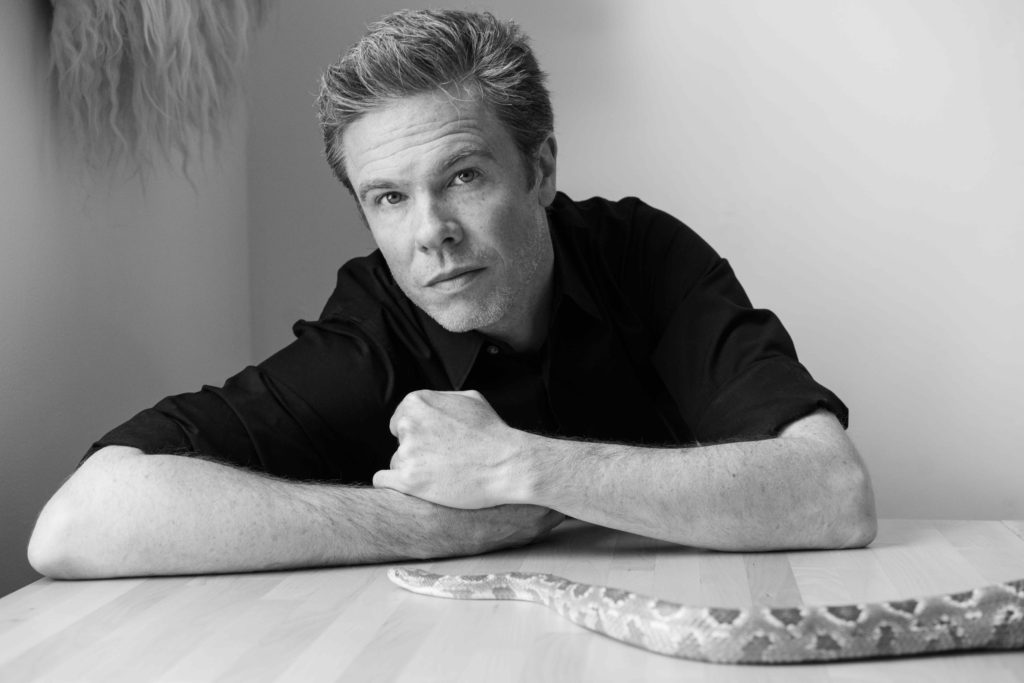
For Josh Ritter, creativity takes on many forms

Singer/songwriter brings Gathering tour to Saturn

By Blake Ells

Photo Credit: Laura Wilson

Josh Ritter isn’t just a musician. He’s a novelist and an artist. He’s found many outlets to creatively express himself, though he’s most comfortable in songwriting. While he began painting again during the writing and recording of his latest release, Gathering, it’s not something that he feels self-assured about. Nine studio albums in, expressing himself lyrically isn’t nearly the same challenge.

His art graces the cover of Gathering, a record that he spent much more time allowing outside voices to influence than his previous work, Sermon on the Rocks. He talked about that process and about collaborating with Bob Weir from the Grateful Dead before returning to Birmingham for the first time since his appearance with Jason Isbell and the 400 Unit at the Alabama Theatre last September.

Birmingham Stages: How did you approach Gathering differently than your previous work?

Josh Ritter: Every record I do is a reaction in some part to the record that came before it. That’s just how it seems to work. That doesn’t mean it’s moving in a positive or negative direction, it’s just how it seems to be for me. With Sermon on the Rocks, I had a very clear idea of what I wanted. I was very sure of the things that I felt needed to go into the record. And I was very un-democratic about it all, in terms of my band and everybody.

So when it came time to make Gathering, I realized that I had in some ways I needed to open up my mind to a much wider set of perspectives. I had been working with Bob Weir on his record, and keeping an open mind for Bob is paramount. It was really cool for me to see how that process worked for Bob. I kind of went into making Gathering with the idea that I was gonna be open minded about the songs. I was gonna record everything I had. And I wasn’t gonna pre-judge songs for the record; I was gonna record everything and then I was gonna really invite the band in to do a ton of the work in helping me move the songs from what I initially envisioned to something that had a little bit more span. Another person that was really important in that process was Trina Shoemaker, who worked with me on this record and the last record as well.

Birmingham Stages: You started painting again while you were going through that process. How long had you been away from it and how did it help guide this record?

JR: With anything artistic, it’s like flipping on a switch. You try it out every so often and things start to catch hold and you keep on going. I find that with songwriting, it works better for me if I don’t approach it like a job every day. I approach it when something comes over me, I work on it. With painting it’s the same; when I feel called to do it, I do it. There’s a very fertile period of time there when I was working on writing and recording where it just wasn’t even enough to satisfy my need to be creating stuff. The paintings were kind of the overflow. For that reason, I thought it was really interesting how the painting felt correspondent to the making of the record.

Birmingham Stages: Have you ever considered making your painting available for purchase?

JR: I’ve considered it. But it’s something that I feel bashful about. I love painting, but I don’t consider myself a real painter. I enjoy it. Id never say never.

Birmingham Stages: Do you know why you feel bashful about that but you seem confident in your songwriting?

JR: I don’t know. I feel that was about writing prose as well. My life’s work is songwriting. It’s the language that I most freely turn to artistically; it’s the one that I feel most comfortable speaking in. In my normal life, that’s my primary way of feeling like I can communicate. And for some reason, I don’t have that same confidence in the other things that I do that are artistic. I find a real comfort in the idea that I find an outlet that doesn’t seem as life or death to me as songwriting sometimes does. Painting or writing a novel is like a trip to the beach compared to songwriting.

Birmingham Stages: Was the cover for Gathering your work?

JR: Yes it is.

Birmingham Stages: There were a lot of songs to choose from when you narrowed it down to this collection. Will we ever hear the ones that didn’t make that cut?

JR: Yes. I’m really proud of all of them. They feel like a record of a very fruitful time. They kind of span all different styles; there’s easily enough in there for a record of outtakes, or perhaps I’ll use them for something else. They’ll just kind of hang out for a while. I believe in writing more than you need, because most of the time, the songs you write aren’t good. Most of the time they’re not that great. And the ones that you really spend your time on, you hope they are your best.

Birmingham Stages: Have you or will you break any of those out live?

JR: Yeah, I’m sure I will. Totally. There’s some fun party numbers in there. There’s a few overtly romantic ones. There’s some good ones in there, I think. They just didn’t work for the record.

Birmingham Stages: How did you hook up with Bob Weir and how did that collaboration come about?

JR: My guitar player and friend, Josh Kaufman, has worked with Bob on a number of different projects. And Bob was talking to Josh about how he wanted to work on a record of cowboy songs; songs that reminded him of when he was working as a ranch hand before the Grateful Dead back in Wyoming. When Josh told me that, I dropped whatever I was eating in the airport and basically begged to be able to write some lyrics. I wrote some lyrics on the plane, initially, on that flight. I sent them off and Bob liked it and we started to pass stuff back and forth a little bit. He was super fun to work with.

Birmingham Stages: Do you maintain a good relationship with Bob? Do you talk often?

JR: Yeah, totally!

Birmingham Stages: You’ve told me before that you are heavily inspired by hip-hop artists. Whose songwriting is inspiring you right now?

JR: The Courtney Barnett stuff is great. I’m a really big fan of the new War on Drugs record. The lyrics I find in The National are very interesting and timely and seem very relevant for some reason; I really love those guys. The new Jay Z record, 4:44, is insane. It’s so good. It’s so confessional and vulnerable and badass. It’s so great, so great. There’s so much good music going on right now.

Birmingham Stages: You can definitely hear how much you enjoy hip-hop in your own music. You can hear it in your cadence. I don’t know if that’s intentional or just a natural reflection of what you absorb…

JR: I think it’s – there’s so much stuff to latch onto these days. The musical world is so rich. I try to spend time on a record a time; really listen. It all seeps in.

Josh Ritter & the Royal City Band will perform at Saturn on Monday, October 23. Good Old War opens. Doors open at 7 p.m. and the show begins at 8 p.m. Tickets are $27.50.